Inquiry Question: What caused the French Revolution in 1789?
Source Analysis: What is the Third Estate?
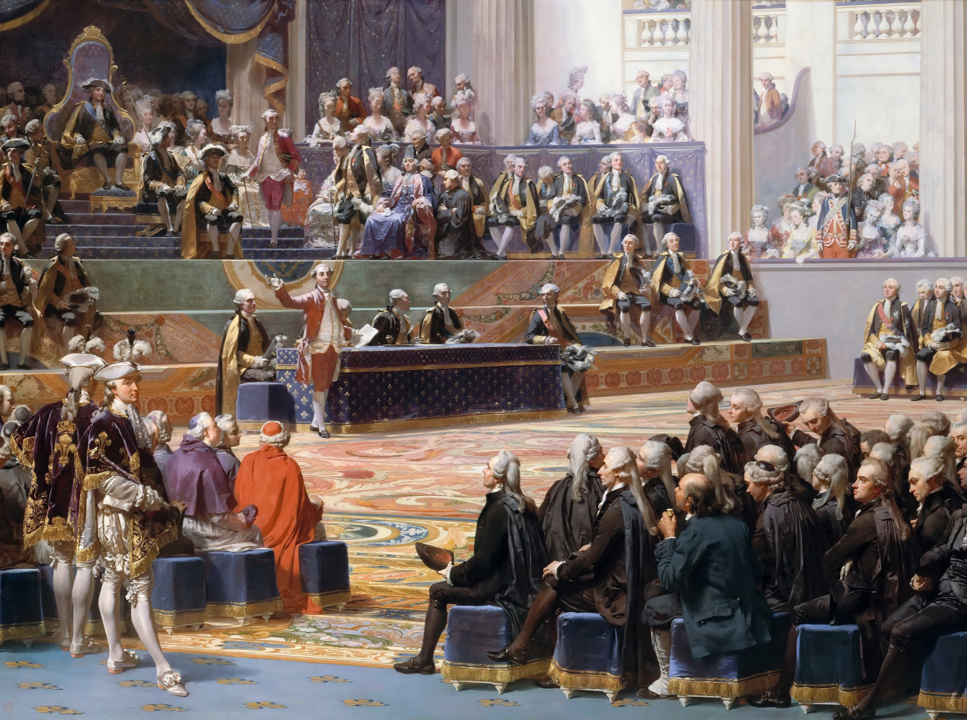
The Estates General of 1789 was a major event in France. This is partly due to the fact that the last time an Estates General occurred was in 1614, nearly 200 years earlier! Furthermore, there was a great deal of excitement among many French people who believed this would be an opportunity to reform the political system.
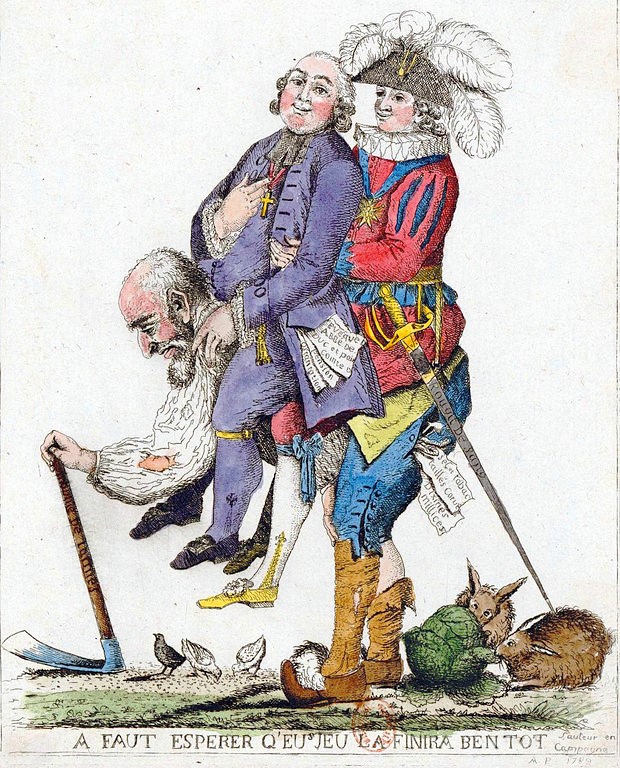
Shortly after the announcement of the Estates General there were several pamphlets and letters written discussing changes that should occur at the meeting. One influential essay, What is the Third Estate? was written by Emmanuel Joseph Sieyes in January 1789.
Complete the attached handout below.
Activity: Roleplay
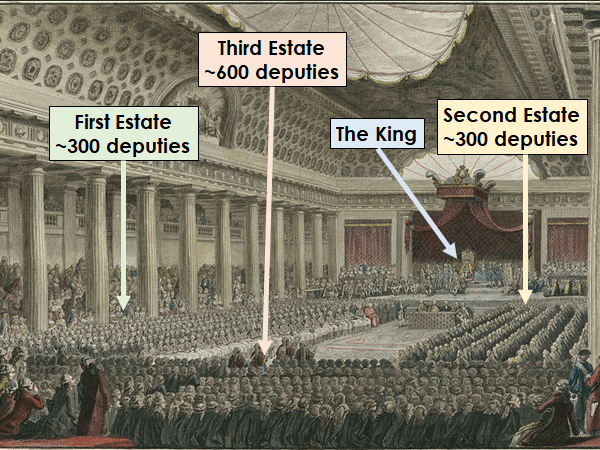
We are going to do a roleplay where we re-enact the Estates General of 1789. Each group will represent one of the Three Estates. Mr. Mitchler will represent King Louis XVI (obviously…).
You are gathered here today to give me advice on how to fix the financial situation of my kingdom. Where will we get more money from?
Your instructions are;
- As a group, read through your information package. Understand who you are, and what you want.
- Create a list of suggestions for how to increase the revenue of the King (how can you get me more money?). List this on A3 paper.
- Choose a speaker that can roleplay your groups position. Try to be in character!
When each estate has given their advice, the others may vote on each proposal. EACH ESTATE GETS A SINGLE VOTE
French Revolution documentary timestamp info: 17:25-30:00.
Focus on Concepts: Causality (cause and consequence)
What is a Constitution?
Viewing Instructions: While you watch the video above take notes on the following questions;
- What is a constitution?
- Why do countries have a constitution? In other words, why are constitutions a good idea?
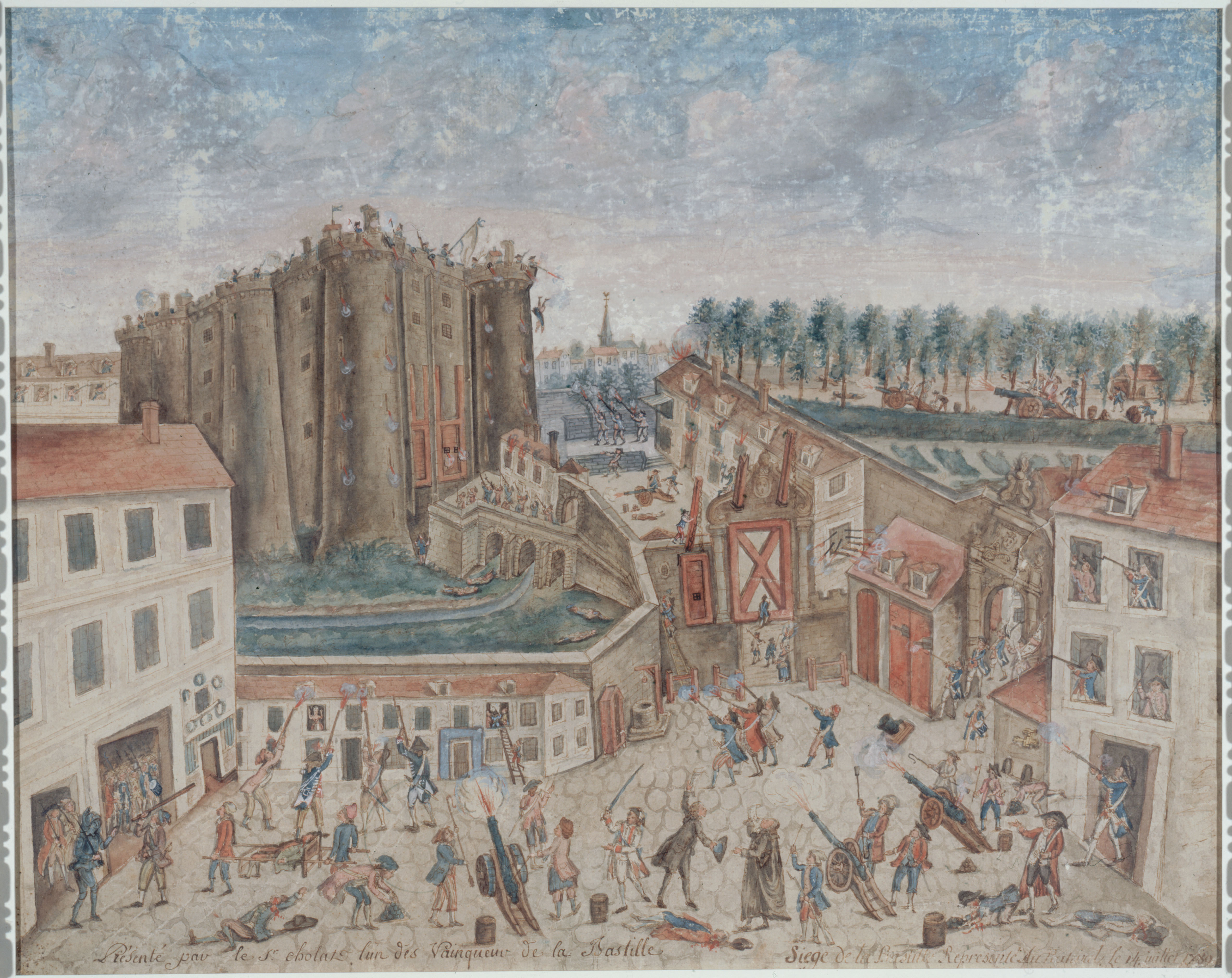
Source: Claude Cholat / Public domain
Big events in history have many causes, and the French Revolution is no exception. This is known as multiple causality. In other words, there is very rarely only one cause of an event in history. Events occur because of a complex relationship between several factors. This is multiple causality.
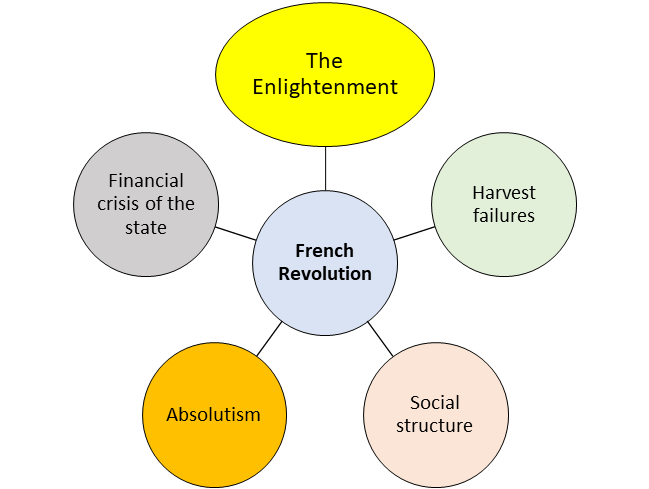
Task Instructions:
- In your groups, discuss the causes of the French Revolution. In other words, which factor was the most significant?
- Rank each factor by significance and justify your choices with evidence. Use your notes to support your conclusions.
LINK TO THE PADLET IS HERE <— CLICK ME
Discuss: To offer a considered and balanced review of something that includes a range arguments or factors. Opinions or conclusions should be presented clearly and supported by appropriate evidence.
Criterion D: Thinking Critically
i. Discuss the concept of causality (cause and consequence).
In Summary…
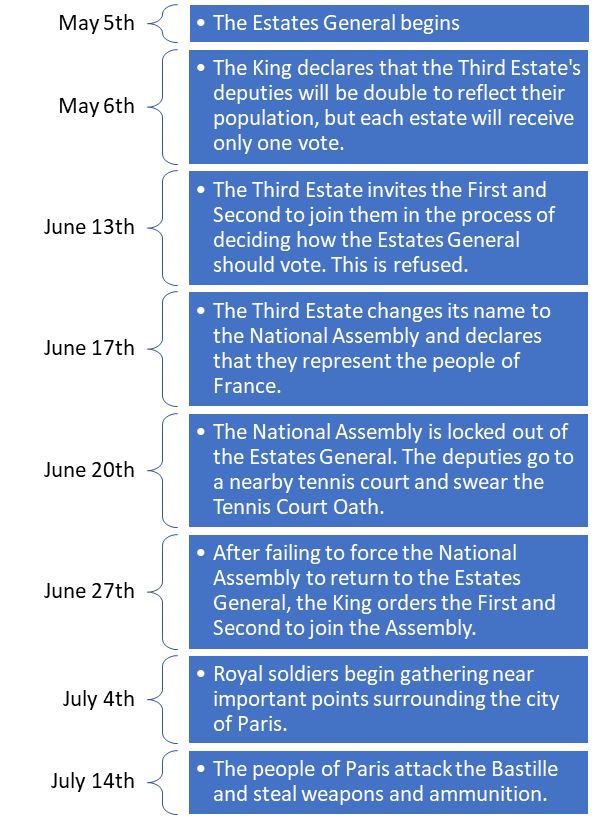
- The French Revolution began at the Estates General of 1789. It started because of the National Assembly’s rejection of royal authority and their demands for more representation in the Estates General.
- The people of Paris, fearing that the National Assembly might be removed by the King’s soldiers, attacked the Bastille prison and looted its stores of gunpowder and ammunition.
- In this act of violent defiance, the people of Paris had demonstrated their support for the Revolution.
- The King backed down and openly expressed his support for reform and change, although he did this very reluctantly.
- In the weeks and months that followed, the National Assembly would make numerous declarations and create several new laws to transform their country according to Enlightenment principles of liberty, equality, and fraternity.
- However, as we shall see, there were some individuals in the Revolution that were unhappy with its progress and would soon demand more radical changes.
Key Terminology
| Estates General | A meeting of the three traditional estates of French society. Summoned only by the King, this meeting served as a place where the King could receive the advice of his subjects on matters of national importance. Although it had the feel of a parliament or representative body of government it held no legislative power, meaning it could not make any laws. The King always had the final decision. |
| Estates General of 1789 | The Estates General of 1789 was a key moment in the history of the French Revolution. Louis XVI was convinced to summon the Estates General to obtain support for new loans and additional taxes in order to solve the government’s financial crisis. The last time an Estates General had be summoned was in 1614. |
| Tennis Court Oath | The Tennis Court Oath was the first open act of opposition to the King’s absolute power and authority. The deputies of the National Assembly were locked out of the Estates General so moved to a nearby room and promised never to leave until the King agreed to a constitution. |
| National Assembly | A name adopted by the Third Estate deputies at the Estates General of 1789. They argued that they were the true representatives of the French people. Some members of the First and Second Estates joined the National Assembly, including Emmanuel Joseph Sieyes (First Estate) and the Marquis de Lafayette (Second Estate). |
| Storming of the Bastille | On July 14th, 1789, the angry and starving people of Paris armed themselves with weapons and attacked the Bastille prison in the center of France. The Bastille was only garrisoned by about 100 soldiers, mostly retired veteran. The capture of the Bastille convinced Louis to withdraw his soldiers and agree to the National Assembly’s demands. |
| Constitution | A constitution is a supreme law that outlines the functions, powers, and limits of the government. More generally it is used as a rulebook for government that everyone must follow. Most modern countries today have a constitution but of course in an absolutist, divine right, monarchy this would not have been possible. |
 CISH Modern History