Objective C: Communicating
i. Communicate information and ideas effectively using an appropriate style for the audience and purpose.
ii. Structure information and ideas in a way that is appropriate to the specified format.
iii. Document sources of information using a recognized convention.
Now that you have an essay outline, it is time to start writing the rough draft! You already have an idea of what your essay will look like and what examples and details you will put in the body paragraphs. What you need to do for the rough draft is write everything out properly in a full essay. This means using paragraphs and full sentences.
To ensure you are writing a good rough draft you should…
- Make sure you have an introduction paragraph, two-three body paragraphs, and a conclusion paragraph.
- Each paragraph should begin with a transition to help the flow of your writing (see attached handout).
- Explain each of your points, examples and supporting details. Your essay should not be your outline copy/pasted to a new page à you need to write more to explain your arguments!
- Write as much as you can now. It is easier to delete than it is to add more.
- Use transitions in your body paragraphs to show a relationship between arguments and evidence or between evidence and more evidence.

- Make sure you follow MLA format see the sample MLA essay attached.
- Include an MLA works cited.
- Include in-text citations for your sources. These sources should already be clearly listed in the outline.
- Make sure you are always thinking about your thesis statement and trying to support it throughout the essay!
- Don’t neglect your conclusion. It is your final chance to convince the reader of your thesis statement and to ensure they fully understand your arguments.
- Use topic and concluding sentences to begin and end each body paragraph.
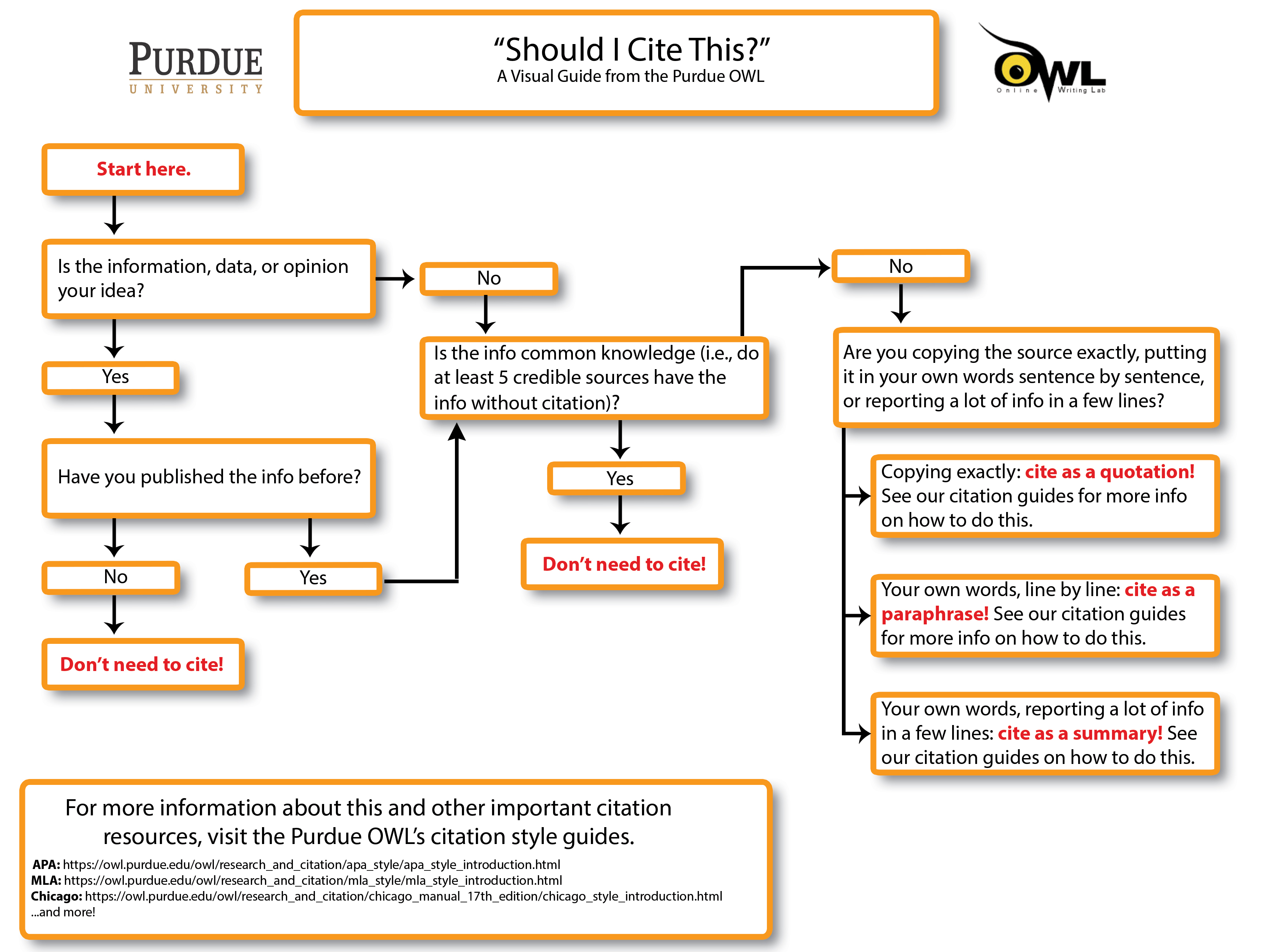
When should I use an in-text citation?
To help you decide when to use an in-text citation, use the flow chart below provided by the Purdue OWL. If you are still unsure, speak to your teacher for more advice.
 CISH Modern History