
Source: Herbert Arnould Olivier, Public domain, via Wikimedia Commons
Inquiry Question: To what extent was Germany responsible for causing World War One?
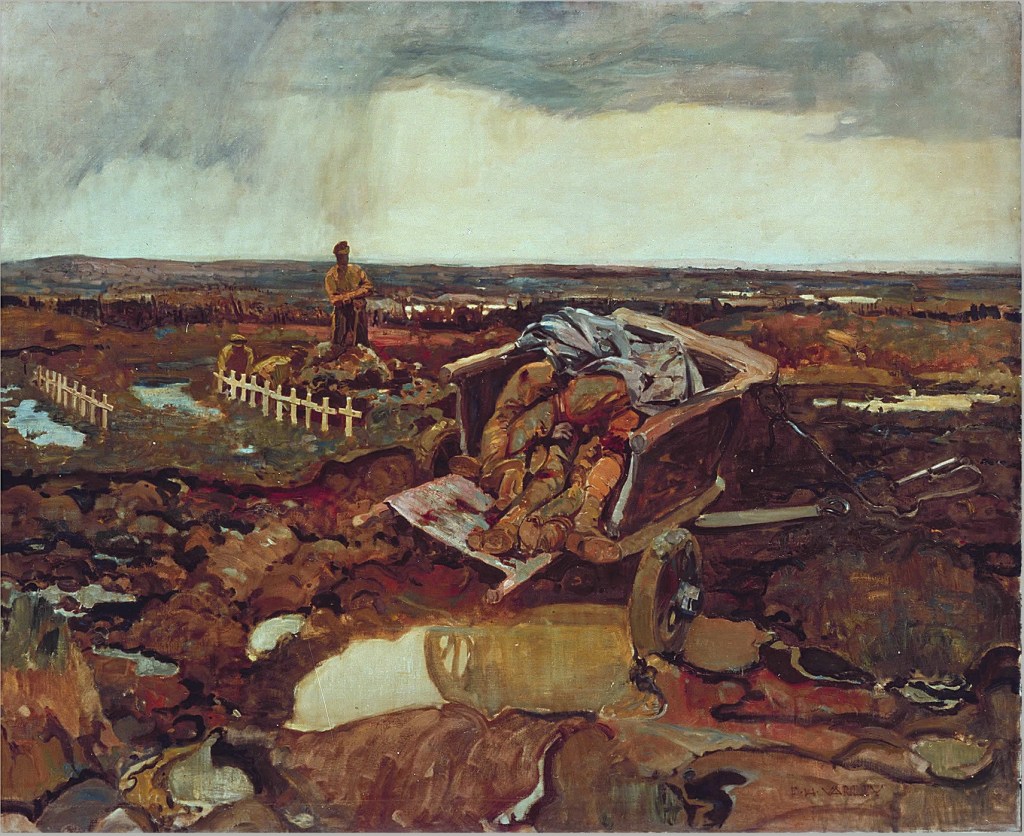
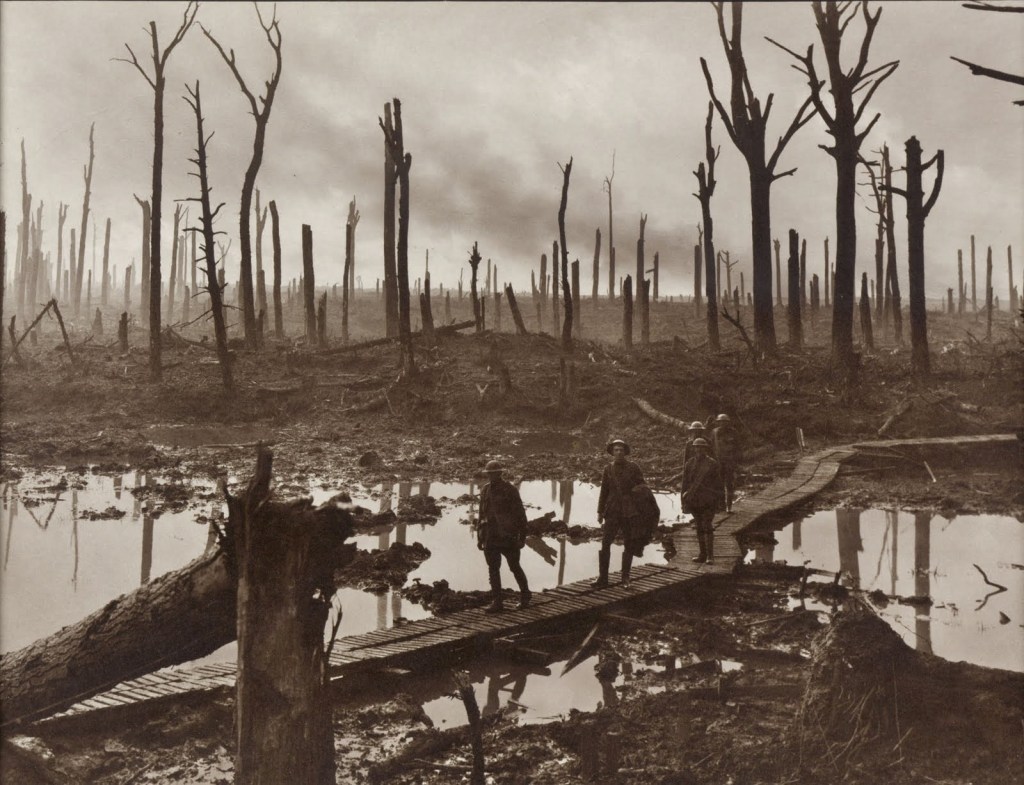
The First World War ended on November 11th, 1918. With a an approximate total of 19-23 million military and civilian dead it was one of the deadliest conflicts in human history. The immense economic cost of the war and the widespread devasation it caused resulted in a great deal of anxiety for the victorious powers who were determined to prevent a future European conflict. However, these powers, especially France, felt that it was a belligerent Germany that had caused the great conflict and that a lasting peace required Germany to be significantly weakened. As we shall see, the Treaty of Versailles was widely resented in Germany and in many ways laid the foundation for the rise of Adolf Hitler and the NSDAP (Nazi Party).
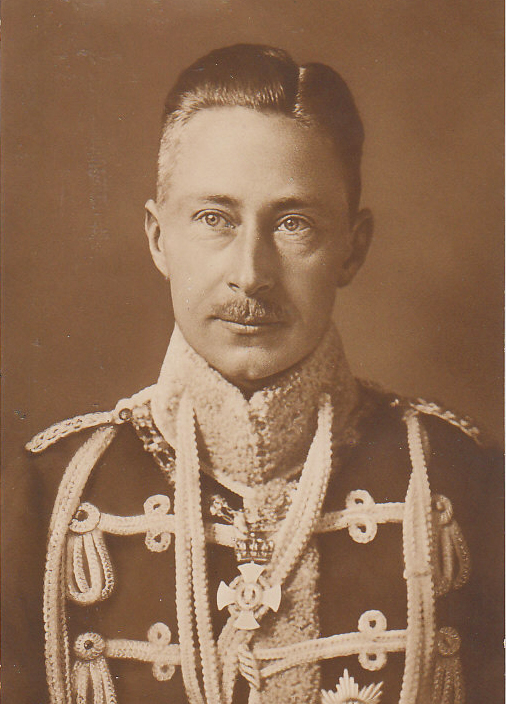
“Undoubtedly this is the most stupid, senseless and unnecessary war of modern times. It is a war not wanted by Germany, I can assure you, but it was forced on us, and the fact that we were so effectually prepared to defend ourselves is now being used as an argument to convince the world that we desired conflict.”
Crown Prince Wilhelm speaking to a foreign journalist in October 1914
Germany on Trial Summative Task Sheet
Key Terminology
| Treaty of Versailles | The peace treaty signed between the Allied powers (United States, France, Britain, Italy) and the German Weimar Republic in 1919. The terms of the treaty were meant the punish Germany for starting the War and to reduce its military power and its territory in Europe. Separate peace treaties were signed with Austria-Hungary and the Ottoman Empire, Treaty of Saint-Germain and the Treaty of Sèvres respectively. |
| Reparations | Financial payments Germany was required to pay to Britain, France and Belgium to compensate them for the destruction that occured during the War. Reparations payments contributed to hyperinflation in Germany during the early 1920s. France would occupy the Ruhr region of Germany to ensure payments were made. |
| War guilt clause | Article 231 of the Treaty of Versailles stated that Germany must accept “full responsibility for all of the damage caused during the War. It also states that Germany waged a war of aggression. This section of the Treaty was extremely unpopular in Germany and caused a great deal of resentment among the German people. |
| Rhineland | An area in western Germany bordering Belgium, the Netherlands, and France. The Treaty of Versailles stated that the Germany army was not allowed to enter this region. The purpose of this was to make it impossible for Germany to invade Belgium and France again. |
| Demilitarization | The opposite of militarism. It is the process of disarming a state by preventing it from increasing its military power through enlargement of the armed forces or obtaining military forces (e.g. tanks, aircraft). One outcome of the Versailles Treaty was the demilitarization of Germany which severely limited the size and capability of its army. It also stated that Germany was forbidden from having an air force. |
 CISH Modern History