
Source: Georg Heinrich Sieveking, Public domain, via Wikimedia Commons
“I die innocent of all the crimes laid to my charge; I Pardon those who have occasioned my death; and I pray to God that the blood you are going to shed may never be visited on France.” – Last words of Louis XVI before his beheading.
Inquiry Question: How did radicalism impact the French Revolution?
Robespierre and the Committee of Public Safety
“If the spring of popular government in time of peace is virtue, the springs of popular government in revolution are at once virtue and terror. Virtue without terror is fatal; terror without virtue is powerless. Terror is nothing other than justice: prompt, severe, inflexible. It is therefore an emanation of virtue… a consequence of the general principle of democracy applied to our country’s most urgent needs.” – Speech by Robespierre to the National Convention in January 1794.
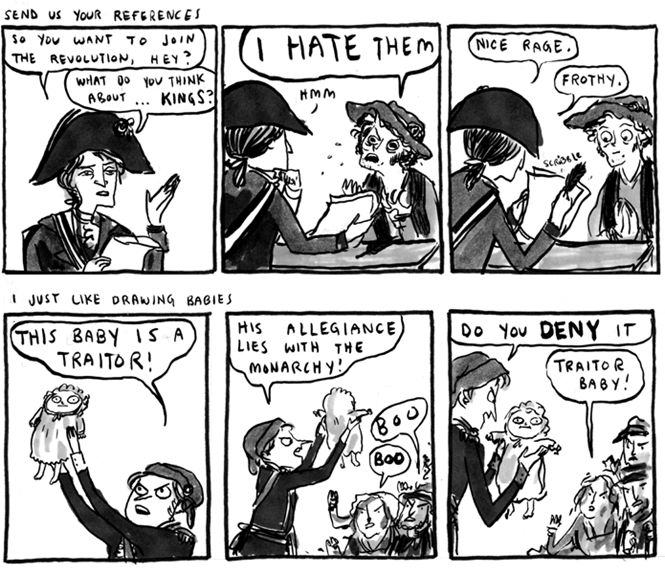
Source Analysis: Robespierre and the Radical Revolution
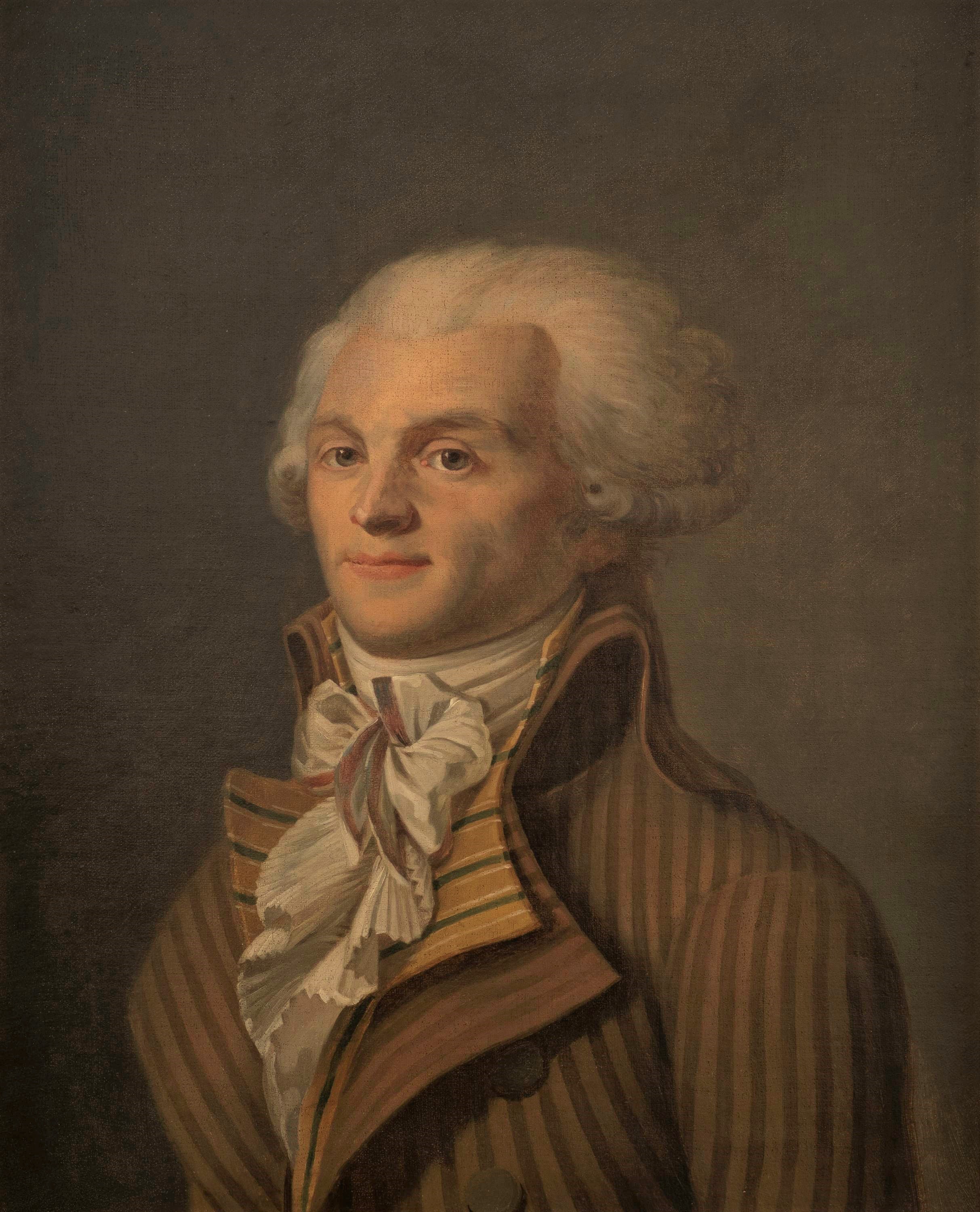
Maximilien Robespierre was one of the most prominent figures of the French Revolution. Originally a lawyer from Arras he attended the Estates General of 1789 as a Third Estate deputy. He remained in the National Assembly and later became a leading figure in the National Convention of 1792. Robespierre famously argued for the King’s execution by proclaiming, “Louis must die, so the nation may live.”. Robespierre later found his way into a leadership position within the Committee of Public Safety and acted as the de facto dictator of the French Republic.
Reflection Jamboard Link ***CLICK HERE***
Key Terminology
| Jacobins | Originally a moderate political club formed to discuss revolutionary ideas by 1792 it had transformed into a radical group of national assembly deputies. Central to their views was the abolition of the monarchy and the establishment of a republic. The Jacobins were heavily influenced by the sancoulottes of Paris who demonstrated their capacity for popular violence. Robespierre and Marat were both Jacobins. |
| sancoulottes | In English, the term sancoulottes literally means “without breeches”. These were the lower class people of Paris that played an important role throughout the Revolution. They stormed the Bastille in July 1789, marched to Versailles in October of the same year, and attacked the Tulleries Palace in 1792. For all intents and purposes, the sancoulottes dominated the city of Paris where the Revolutionary government was. |
| Reign of Terror | A period of political violence following the execution of King Louis XVI in January 1793. Suspected enemies of the Revolution were arrested, put on show trials, and quickly sentenced to death by guillotine. Total numbers are uncertain but tens of thousands died across France during the Terror. |
| Cult of the Supreme Being | The state religion promoted by Robespierre who attempted to create a “Republic of Virtue” where everyone had good behavior and believed in the ideals of the Revolution. He believed the “Supreme Being” had designed the world to be a place of reason, liberty, and virtue. The Cult was a tremendous failure as it was incredibly unpopular with the French people. |
| Committee of Public Safety | |
| Maximilien Robespierre | |
| National Convention | The new revolutionary government formed after the Attack on the Tulleries and the dissolution of the National Assembly. Deputies in the Convention were elected by universal suffrage, meaning all adult men could vote. |
| Levee en masse | Conscription of all adult men to the Revolutionary Army. The National Convention enacted this policy because it was losing the war to Austria, Britain and Prussia. This is the first mandatory draft of soldiers in world history and would later lead to the huge numbers of soldiers seen in future wars, including World War One. |
| Jean-Paul Marat |
 CISH Modern History