
Source: Isidore Stanislas Helman, Public domain, via Wikimedia Commons
Inquiry Question: What does a fair government look like?
Graffiti Boards: With a sheet of A3 paper, work with a group to write some answers to the inquiry question above. This question is conceptual meaning that it is not specific to any place or time.
Source Analysis: Declaration of the Rights of Man and the Citizen
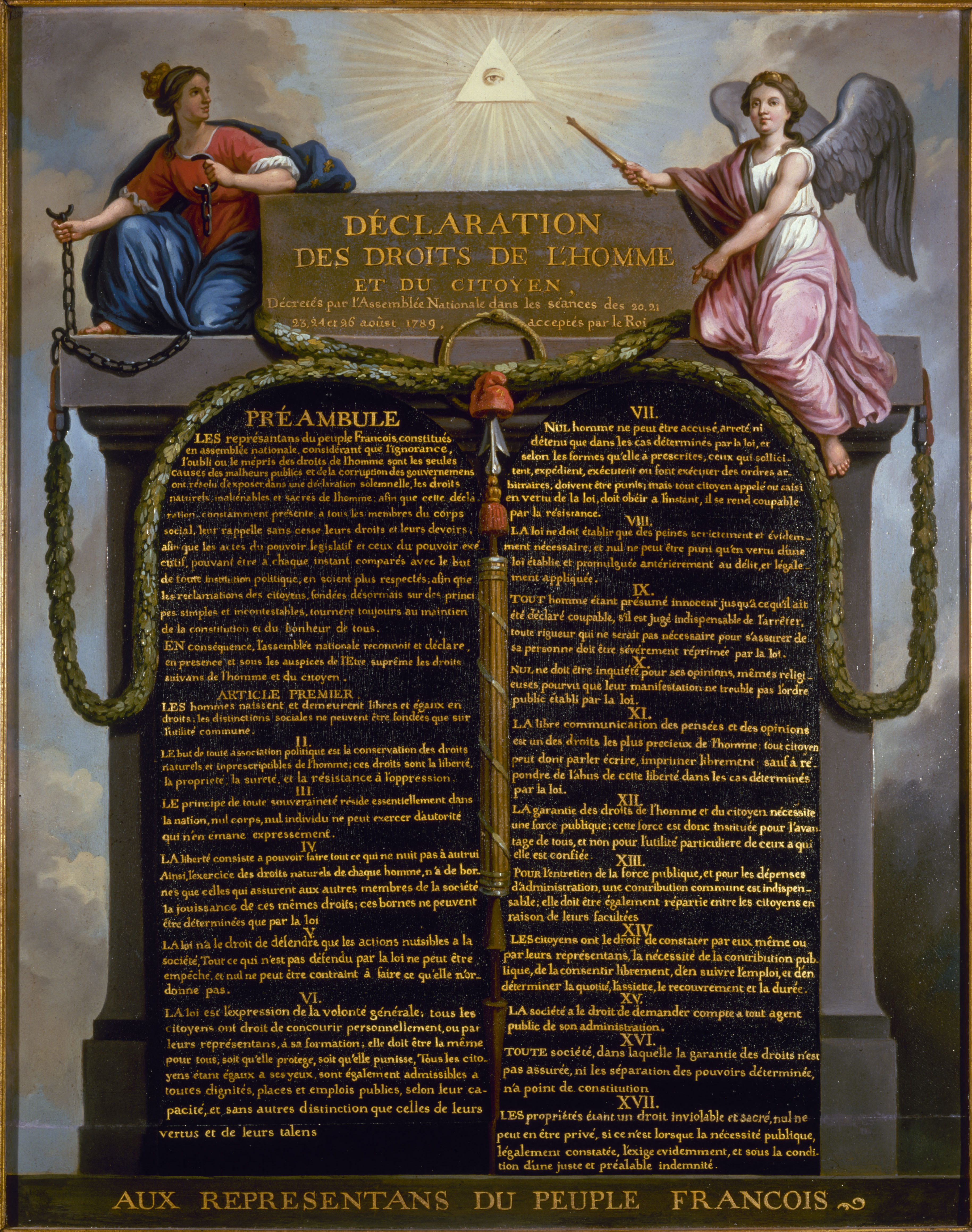
One of the most significant documents to come out of the French Revolution is the Declaration of the Rights of Man and the Citizen. Inspired by the ideas of the Enlightenment, the National Assembly sought to lay the new constitution of France on a solid and fair foundation.
The Declaration of the Rights of Man and the Citizen was written by the Marquis de Lafayette (a nobleman) and Emmanuel Joseph Sieyes (a clergyman).
Go to page 184 in Glencoe World History and read through the rights included in the Declaration of the Rights of Man and the Citizen. Answer the following questions.
- What does the Declaration blame for the “public misfortunes and corruption of governments”?
- How does the Declaration describe liberty?
- What does the Declaration say about opinions?
- Where can you see evidence of Enlightenment thought or ideas in the Declaration of the Rights of Man and the Citizen?
- Can you think of any problems with the Declaration?

Bonus Knowledge! In September, 1791, a French playwriter named Olympe de Gouges wrote Declaration of the Rights of Woman and the Female Citizen. In this document, Gouges mimiced the Declaration of the Rights of Man, arguing unequivocally that “Woman is born free and remains the equal of man in rights. Social distinctions can only be founded on a common utility.” Unfortunately, her comments were not looked upon favourably by the Revolutionary leaders of her time. In 1793, she was arrested by the radical Jacobin faction and executed by guillotine in Paris.
Constitutional Monarchy
Guiding Question: What is a constitution and why do societies create them?
Timeline: The “Moderate” Phase of the Revolution
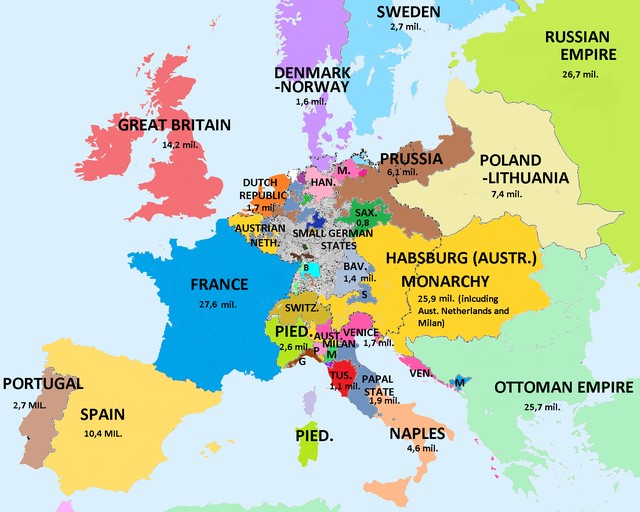

To help you understand the chronology and sequence of the French Revolution, it will be helpful to organize significant events into a timeline. Below is a list of significant events of the French Revolution.
- Your task is to work collaboratively in your groups to organize them in chronological order, identifying the specific dates they occurred on (day/month/year).
- In addition, you should write a brief explanation for each event, outlining its causes and consequences.
- The textbook will be a helpful resource to use for this activity, but you may wish to access sources on the internet. Suggested sources are linked below.
Declaration of Pilnitz
Women’s March on Versailles
Attack on the Tulleries Palace
The Flight to Varennes
Declaration of the Rights of Man and the Citizen
Attack on the Bastille
Key Terminology
| The August Decrees | A series of declarations made by the National Assembly on August 10th, 1789, in response to the Great Fear. Deputies of the National Assembly, including members of the Church and nobility, voted in favour of abolishing feudalism in France and many of the associated taxes. |
| The Great Fear | A wave of popular violence and unrest that swept across much of France in the weeks following the Attack on the Bastille. Rumors that the nobility were preparing to fight the National Assembly circulated leading to attacks on their lands and castles. |
| Constitution | A supreme law that determines the powers of government, including limits what government can do. Think of it like a rulebook. |
| Constitutional Monarchy | A form of government where the head of state is a monarch (king/queen) but their power is limited or constrained by a constitution. There is usually a representative body that makes laws, like parliament in the UK or Canada. |
| Declaration of the Rights of Man and the Citizen | Perhaps the most significant document to come out of the French Revolution. It outlined what the National Assembly deputies believed were the “natural rights of man”. Unfortunately, the Revolution would do a poor job of living up to its high ideals. |
 CISH Modern History